Which bread for which sandwich
Crust, crumb and texture — how to pick the right bread from our range for any kind of sandwich.
A sandwich isn’t only about the filling — the bread carries the whole construction and decides whether the bite feels balanced or falls apart. At Pan Pan, each bread has its own character of crust and crumb, so it pairs differently with different sandwiches.
Crisp crust, light crumb
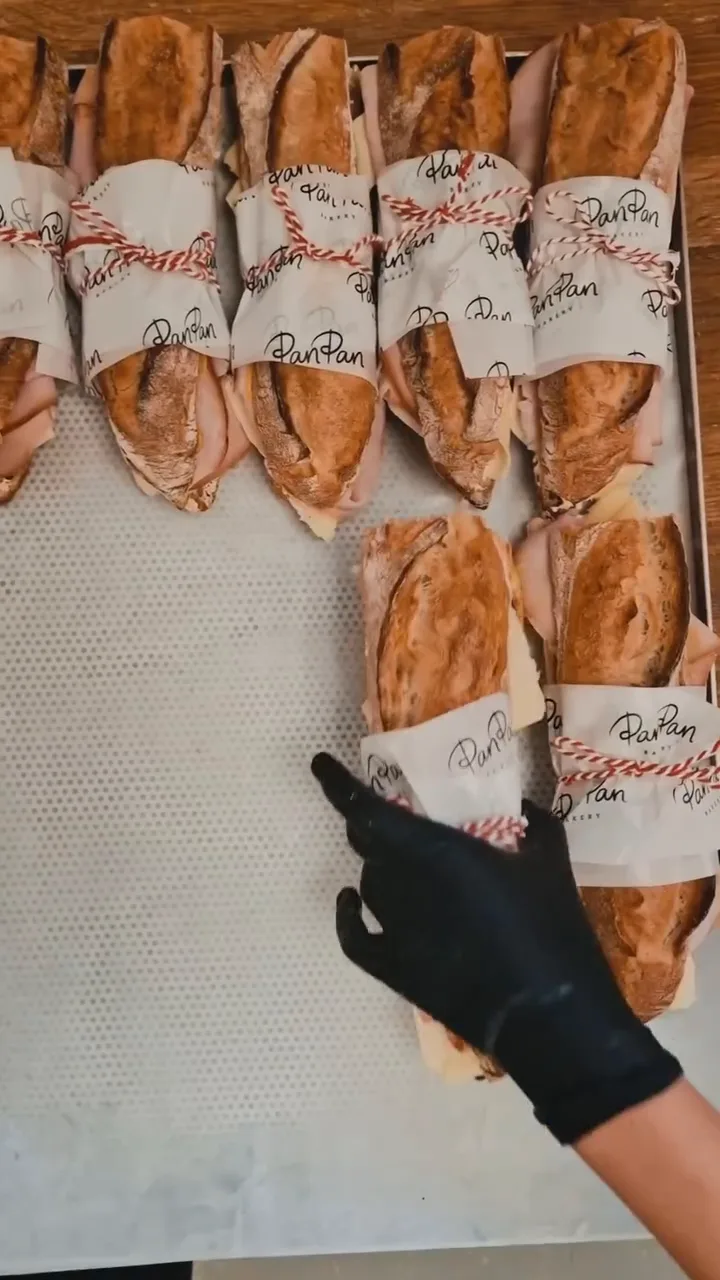
Baguette and Ciabatta share a similar logic — a thin, crisp crust and an open, airy crumb with irregular holes. That openness lets the crumb take on fresher, moister ingredients without turning soggy, because the crust stays firm as a frame around the filling. Both breads work well when you want the bread to offer resistance on the first bite, then quickly give way to the filling.
Denser crumb for stronger flavour
Focaccia, while also crisp-crusted, has a denser, more oil-rich crumb thanks to the olive oil in the dough. That gives it its own pronounced flavour which adds character to the sandwich before any filling is even added — a good base when the filling itself is salty or strongly flavoured, since the bread doesn’t stay purely neutral.
Rye bread goes the opposite way: a denser, firmer crumb and a darker, earthier flavour that calls for similarly intense fillings so it isn’t overshadowed. That’s why a thinner slice works better with this bread — more bread surface relative to thickness makes the stronger flavour easier to enjoy.
A softer option for an easier bite
Brioche is a different approach altogether — a soft, feathery crumb and a gently sweet flavour, without a pronounced crisp crust. It doesn’t compete with the filling but wraps around it, making it a natural choice for sandwiches where you want softness rather than resistance on the bite.
There’s no single “correct” bread for a sandwich — it depends on whether you want the crust to be part of the experience or want the bread to stay in the background. Baguette and Ciabatta when you want crispness, Focaccia when you want flavour in the bread itself, Rye when the filling is strong, Brioche when you want softness from start to finish.
The thickness of the slice matters too. A thinner slice of Baguette or Ciabatta leaves more room for the filling to come through, while a thicker slice of Rye bread stays firm enough to hold a heavier filling without falling apart in your hand.
Next time you’re making a sandwich at home, look at the bread before the filling — it already tells you what it will pair with best.